




Planning a trip to South Africa is one of those experiences that feels exciting from the very beginning, but it also quickly reveals one important reality: it is not a simple destination, this is why you need this South Africa travel guide.
Not because traveling in South Africa is difficult, but because the country is incredibly diverse and making the right choices is not always easy.
In just a few days, you can move from the ocean to the mountains, from vineyards to the savannah, from modern cities to landscapes that feel completely timeless. And it is precisely this complexity that makes South Africa such an extraordinary journey… if planned the right way.
Over the years, we have seen hundreds of itineraries: some perfectly balanced, others full of avoidable mistakes. The difference always comes down to the same elements: choosing the right destinations, managing travel times properly and having real knowledge of the country.
In this guide, you will find everything you truly need to know:
how much a trip to South Africa costs, the best itineraries, when to go and how to avoid the most common mistakes.
This guide is designed for travelers who want to do things properly from the very beginning.
How much does a trip to South Africa cost?
Talking about travel costs in South Africa without context can be misleading.
There is no absolute price, but it is possible to get a realistic idea of the cost of a trip to South Africa by considering a few key variables.
Generally speaking, travel costs fall into these ranges:
- a basic self-drive trip starts from around €1,800–2,500 per person
- a well-balanced trip with quality lodges and properly organized safaris usually ranges between €2,500 and €3,500
- a high-end luxury trip can easily exceed €4,000–5,000 per person and go far beyond that
What many people underestimate is that the cost is not determined so much by the destination itself, but by how the trip is designed.
South Africa is an extremely flexible destination. It can be relatively affordable, but it can also become a very high-end journey. And often, the difference is not immediately obvious at first glance.
Safari: the factor that changes everything
If there is one element that significantly affects the total cost of a trip to South Africa, it is the safari.
Safari prices vary depending on several factors and largely reflect the quality and type of experience offered.
As a general indication, a good safari lodge can cost between €150 and €300 per night, while private reserves and high-end lodges can range from €400 to €1,000 or more per night.
These differences are not only about comfort, but also about the safari experience itself: the quality of guiding, the number of vehicles in the reserve and, most importantly, the area where the safari takes place, which can greatly influence wildlife density and sightings.
At the same time, price is not always an absolute indicator of quality. There are affordable lodges offering excellent safari experiences, just as there are expensive properties that do not necessarily deliver proportionally better results.
For this reason, choosing the right safari should involve evaluating the overall experience rather than focusing only on price.
What really affects the price
Several factors concretely influence the overall cost of a trip to South Africa:
- the number of travelers, as traveling in groups of four helps optimize costs
- the time of year, with higher prices during South African holiday periods
- the choice of accommodations, which can have a major impact on the budget
- whether you choose self-drive or a private guided experience
- the exchange rate between the euro and the South African rand, which in recent years has made the country more accessible compared to other destinations
South Africa itineraries: how to build a trip that truly works
One of the most common mistakes is assuming that South Africa is easy to organize, almost intuitive. In reality, it is not.
Not because it is complicated in itself, but because it is incredibly diverse and requires thoughtful decisions. It is a vast country with long distances, logistics that are not always straightforward and experiences that vary dramatically from one region to another.
This means that building an itinerary is not simply about “adding destinations together,” as you might in a smaller country. It is about creating the right balance between experiences, travel times, pace and personal interests.
It means understanding how much time to dedicate to Cape Town without rushing it, how to include safari properly without turning it into a rushed stop and when it makes sense to add a coastal destination, or simplify instead.
It also means avoiding very common mistakes such as underestimating distances, squeezing too many transfers into a few days or including experiences that look appealing on paper but end up making the trip unnecessarily exhausting.
A well-designed itinerary is not the one that includes the most places, but the one where every stop makes sense, every transfer is justified and the journey flows naturally.
That balance is what transforms a list of destinations into a coherent and genuinely memorable experience.
The classic itinerary: simple but complete
For first-time visitors, the classic South Africa itinerary—usually between 11 and 15 days—combines Cape Town with safari.
It works extremely well because it captures the country’s different identities without making the trip too fragmented or exhausting.
Cape Town is the ideal starting point. It is a remarkable city, not only because of its spectacular location between ocean and mountains, but because of the sheer variety of experiences it offers.
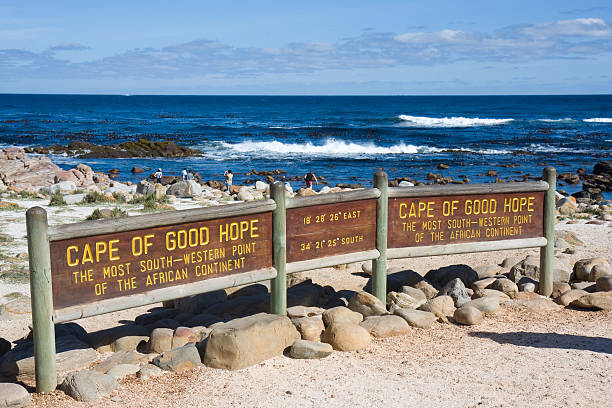
From there, travelers explore the Cape Peninsula, one of the most scenic areas in South Africa, with dramatic coastal roads, wild beaches, charming villages and iconic places such as Boulders Beach and its penguin colony.
A short distance away are the Cape Winelands, where the atmosphere changes completely. Vineyards, historic architecture and refined gastronomy create a slower and more elegant rhythm around towns such as Stellenbosch and Franschhoek.
The journey then moves toward the Greater Kruger area via an internal flight. Here, everything changes. Safari introduces a completely different dimension based on patience, observation and direct contact with nature.
Finally, if time allows, the Panorama Route adds another layer to the experience with canyons, waterfalls and breathtaking viewpoints.
This itinerary works because it is balanced. It alternates dynamic moments with slower experiences and combines very different landscapes without ever feeling chaotic.
When you have more time
With a few extra days available, the trip changes significantly.
It is no longer just about adding destinations, but about discovering a more authentic and less obvious South Africa.
Areas such as Route 62, the Overberg, the West Coast or the Cederberg offer quieter landscapes and a more relaxed atmosphere.
Then there is the Karoo, one of the country’s most underrated yet fascinating regions: endless roads, deep silence and a sense of space that completely transforms the rhythm of the journey.
With more time, South Africa does not simply become “longer.” It becomes richer and far more personal.
Safari: not only Kruger
Kruger is undoubtedly South Africa’s most famous safari destination, but it is not the only option.
Private reserves in the Greater Kruger area offer more exclusive experiences with fewer vehicles and exceptional wildlife sightings.
Pilanesberg, Waterberg and Madikwe are located near Johannesburg and represent excellent malaria-free alternatives for travelers with limited time.
The Eastern Cape allows travelers visiting Cape Town to include safari without domestic flights, simplifying logistics considerably.
KwaZulu-Natal is home to Hluhluwe-iMfolozi, iSimangaliso and several private reserves that, while less famous, offer truly unforgettable safaris.
The right choice always depends on the overall itinerary—not just on safari itself.
When to visit South Africa
One of South Africa’s greatest advantages is that it can be visited year-round.
However, every season offers a completely different experience.
Best time for safari
From May to October, during the South African winter, vegetation is thinner and animals gather around water sources, making wildlife sightings easier and more frequent.
This is generally considered the best safari season, especially for self-drive travelers.
Summer, from December to April, offers greener landscapes, excellent birdwatching and the herbivore birthing season.
Whale watching season
Between June and October, whales approach the coastline and can often be spotted from land in areas such as False Bay, Hermanus and the Cape Peninsula.
For closer encounters, dedicated whale-watching boat excursions are available.
The same period also offers favorable shark viewing conditions, including cage diving experiences in selected areas.
Cape Town through the seasons
Cape Town is a destination that can be enjoyed at any time of year.
Summer, from December to February, is vibrant and energetic, perfect for beaches and outdoor living.
Winter, from June to August, is greener, quieter and often more authentic, with whale season beginning along the coast.
Spring and autumn are usually the most balanced seasons, with mild temperatures and fewer crowds.
Cape Town is not tied to one perfect season—it simply offers different experiences throughout the year.
What to do in South Africa beyond safari
Limiting a trip to South Africa to safari alone means missing an essential part of the experience.
Cape Town, the Cape Peninsula, the Winelands, the Karoo, the West Coast and the country’s ocean-based activities all contribute to making South Africa one of the world’s most diverse destinations.
It is precisely this combination of experiences that makes South Africa unique and difficult to compare with anywhere else.
Practical tips for planning your trip
Self-drive or private guide?
Self-drive is a great option and helps reduce costs. Driving in South Africa is relatively easy when the itinerary is well planned.
At the same time, many travelers prefer using a private driver or guide. It is not just about comfort, but about experiencing the journey differently, without worrying about logistics or driving.
When to book
South Africa is not a destination that should be organized at the last minute, especially during peak travel periods.
The best safari lodges often sell out many months in advance.
Booking 6–9 months ahead for high season is generally the smartest choice.
Is South Africa safe?
South Africa is a safe country to visit when the trip is properly planned.
Some areas require attention, particularly in large cities, but this should not discourage travelers.
Driving is generally safe, although night driving is best avoided—not only because of security concerns, but also because animals and pedestrians can unexpectedly appear on the roads.
As with most destinations, problems usually arise from improvisation rather than from the country itself.
Managing travel times
Distances in South Africa are often underestimated.
The country is vast and destinations are spread far apart, meaning travel times require careful planning.
Trying to fit too many stops into a short trip is one of the most common mistakes.
A successful South Africa itinerary is built around balance: well-distributed transfers, coherent stops and enough time to genuinely experience each destination.
In most cases, seeing fewer places—but experiencing them properly—is the better choice.
The most common mistakes (and how to avoid them)
Some of the most common mistakes when planning a South Africa trip include:
- trying to include too many stops in too little time
- underestimating the importance of safari choices
- ignoring seasonality
- choosing accommodations based only on price
- organizing the trip without genuine local knowledge
The result is often still a good trip—but rarely an unforgettable one.
Useful insights for planning your trip
If you are considering a trip to South Africa, there are a few topics worth exploring further:
- how much a safari really costs and how to choose the right lodge
- the best time to visit month by month
- how to organize a safe self-drive itinerary
- the best 10- or 14-day itineraries
- what to do in Cape Town and along the Cape Peninsula
These are the elements that truly make the difference.
FAQ – Frequently Asked Questions
How much does a trip to South Africa cost?
It depends on the level and duration, but generally between €2,000 and €4,000 per person for a well-designed itinerary.
What is the best time to visit?
For safari: May to October.
For whale watching: June to October.
For summer holidays: December to March.
Cape Town can be visited year-round.
Is self-drive better than a private guide?
Both are excellent options—it depends on the type of experience you want.
Is South Africa safe?
Yes, if the trip is properly planned.
How many days are needed?
A minimum of 10 days is recommended, while 12–14 days is ideal.
Why the difference lies in how the trip is designed
South Africa is one of those destinations where the real difference is not the place itself, but how the journey is built.
The same destinations—Cape Town, the Cape Peninsula, Kruger—can feel completely different depending on the choices made beforehand.
A well-designed itinerary creates the right rhythm, connects destinations naturally and transforms the journey into something truly meaningful.
When it is planned properly, every part of the trip makes sense.
When it is not, even the most beautiful places can feel superficial.
In the end, what remains is not only what you saw, but how you experienced it.
Conclusion
A trip to South Africa is not something to copy from another traveler’s itinerary or from a generic travel brochure.
It is something to build together around your interests, travel style and expectations—and who better than people who actually live in the country can help you create something unique and tailor-made?
Because when an itinerary is designed properly, everything changes.
If you want to do it the right way, let’s start from there.
REQUEST A QUOTE OR BOOK A CONSULTATION


